July 5, 2026 · Buğra Akdemir
Designing the Autonomous CEO-Worker Task Loop
agentstask-looparchitectureflutter
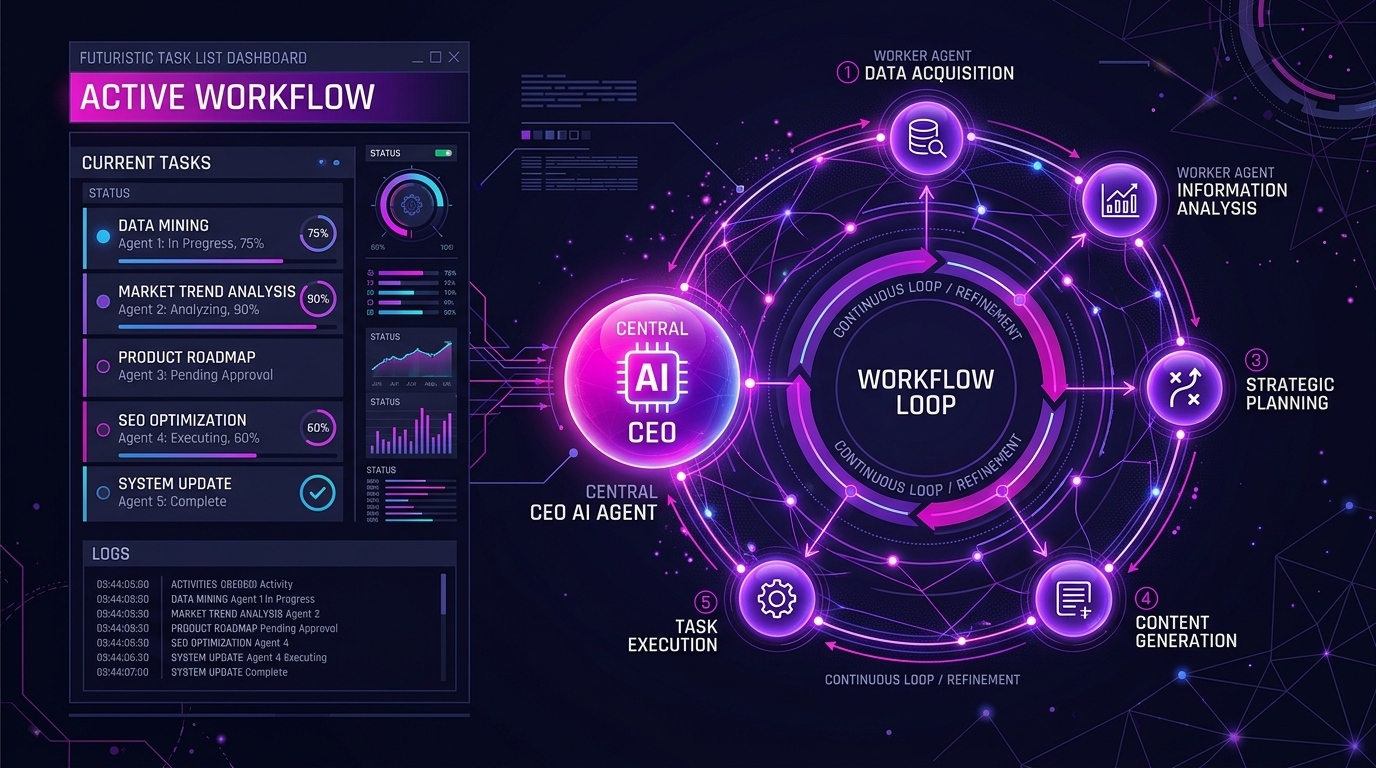
Autonomous AI agents are most effective when they have a structured workflow to iterate, self-correct, and review their own outputs. In this update, we are introducing a major architectural improvement: the Autonomous Task-Loop.
The CEO/Worker Paradigm
Inspired by software development teams, our task-loop follows a two-tier review loop:
- The CEO Agent (Planner/Reviewer): This high-level orchestrator breaks down the main user goal into actionable sub-tasks, assigns them to worker agents, and reviews the output. If a worker's result is incomplete or contains errors, the CEO rejects the step and sends it back to the worker with clear feedback.
- The Worker Agent (Executor): This execution engine takes a single, well-defined sub-task and runs tools (like terminal command execution, file read/write, and web search) within a secure sandbox environment to produce the requested output.
This loop repeats autonomously until the CEO determines that the user's primary goal has been successfully met, providing a highly reliable feedback loop that dramatically reduces AI hallucinations.
GUI and Layout Refinement
To accommodate these multi-step autonomous sessions, we completely restructured the Flutter frontend's task layout:
- Persistent Headers: Important session context and status badges now stay pinned at the top while you scroll through the activity feed.
- Refined Empty State: A cleaner dashboard view guides users on how to define their first autonomous goal.
- Integrated Task Lists: The task management list is now neatly docked inside the Agent Screen, letting users switch context between conversations and active task loops effortlessly.
- Type-Safe Refresh Logic: Behind the scenes, we resolved type handling bugs and state refresh glitches to ensure the Riverpod providers sync state atomically when tasks complete.
Core Modules
- Autonomous Engine: Implemented in
internal/agent/executor.goand structured via CEO/worker orchestration. - UI Controls: Located in
frontend/lib/screens/tasks_screen.dartfeaturing dynamic status updates and real-time step streaming.